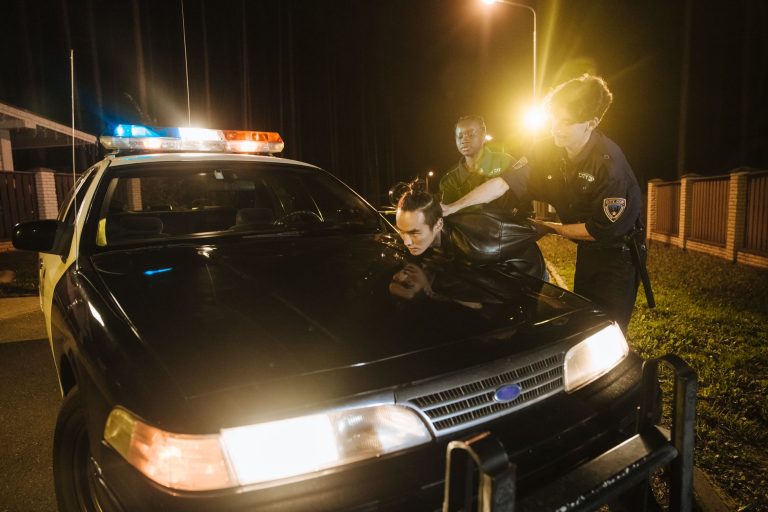

If you’ve been charged with a federal drug crime, it can mean serious trouble, even before it gets to court. Getting arrested can affect your job and family, income, and freedom. Having federal agents ask you questions or examine your records makes it the most stressful. But the government hasn’t proven its case just because you have been arrested.
- What Makes Evidence Important in Drug Cases?
- How Do Federal Drug Lawyers Attack Search Evidence?
- The examination of a search warrant
- Contesting Illegal Searches
- Can a lawyer contest drug lab results?
- What is a chain of custody and why does it matter?
- How Do Lawyers Fight Phone and Digital Evidence?
- Can You Challenge Witness Testimony?
- Why Legal Defense Is Important in Washington, DC
- Frequently Asked Questions
- Related Reading
The government will need to introduce evidence on each charge. A defense lawyer can examine that proof and challenge any proof that was illegally collected or used.
Federal drug possession, manufacture, distribution cases in Washington, DC Evidence in these cases can include witness testimony, lab testing results, phone logs, and search logs. Federal Criminal Practice Group of Price Benowitz LLP regularly helps victims in Washington, DC, who are accused of drug crimes.
Knowing how defense attorneys try to attack evidence can help people make informed decisions.
What Makes Evidence Important in Drug Cases?
Evidence is the foundation of any federal criminal case. Prosecutors rely on it to show who did what. But in possession cases, the government may argue someone knowingly had possession of an illegal drug. In cases of distribution, the government may claim someone either sold or gave away controlled substances or intended to sell illegal narcotics. Common evidence is:
- Arrest/search and seized drugs, etc.
- Police reports and search warrant documents.
- Phone calls, texts, and online communications.
- Bank and cash records/payments.
- Statements from witnesses and claims from informants.
- Photographs and videos.
- Or drug lab findings and test results.
A lawyer can’t take everything as fact. All evidence must be challenged for accuracy, legality, and context.
How Do Federal Drug Lawyers Attack Search Evidence?
Searches are common in federal drug cases. Agents may search homes, vehicles, storage units, or other locations. Warrants: The Fourth Amendment provides protection against unreasonable search and seizures of warrants. Federal agents generally must have a warrant to perform a search, unless a warrant is not required or an exception to the warrant requirement applies.
The examination of a search warrant
A defense lawyer can figure out if a search warrant was legal. The warrant should properly describe place and things. The lawyer might ask:
- Was it approved by a judge?
- Was the warrant in the correct place?
- Did agents search outside its lawful scope?
- Were the facts supporting the order misleading or untrue?
If the officers don’t comply with search guidelines, the defense can argue to the court that she should suppress the evidence. Often referred to as a motion to suppress.
Contesting Illegal Searches
Warrantless Searches Sometimes Happen Federal law does provide some exceptions, but each has legal limits. For instance, officers can allege that there was consent to a search. An attorney may investigate whether that consent was freely given. The defense can also contest claims of emergencies or other legal bases.
The details matter, and even small details can affect the court’s decision.
Can a lawyer contest drug lab results?
Yes. Lab results can make a huge difference in a federal drug case. They can identify the weight and substance. But the lab work has to be done correctly. Some doubt about a test or handling error is pretty cloudy. A defense lawyer can look into:
- Testing the substance:
- Training and staff of lab workers.
- Contacts for the sample.
- The weight and purity of the agent as described.
- Any inconsistencies in their testing and storage logs.
These records will show if the results are credible. A lawyer may also seek an independent review of the facts and law if possible.
What is a chain of custody and why does it matter?
The Chain of Custody: Documenting Who Touched Evidence When. It’s what proves that what’s tested in a lab is what the officers collected. It’s like tracing a package’s journey. Record each handoff step in detail. The defense can question if steps are missing or not clear. Was the sample in a secure location? Was it mixed up? Was the lab testing the right thing?
Gaps don’t automatically mean evidence is inadmissible. However, such a gap can impact the weight a judge/jury may give it.
How Do Lawyers Fight Phone and Digital Evidence?
Text messages, call log records, emails, and social media records play a role in federal drug cases. These records can be used to implicate someone in drug trafficking. But a text doesn’t necessarily tell the whole story. Without context, a short text can mean something quite different. The defense attorney can think of:
- Whether agents had permission to search the device.
- Whether information obtained was within the scope of search warrants.
- Whether the messages were in full or out of context.
- Whether someone else had an account or phone.
- If electronic records were altered or destroyed.
An attorney can dispute undocumented claims. They can also challenge the discovery, review, and preservation of digital files by agents.
Can You Challenge Witness Testimony?
Federal prosecutors can use witnesses or informants in drug cases. Some witnesses have been charged with crimes or are seeking more favorable plea deals. Not all witnesses are liars, to be sure. But we ought to examine their motives for speaking. Defense attorneys can compare witness testimony against other evidence.
They can search for inconsistent stories, gaps in information, or statements that are contrary to known facts. A lawyer may also cross-examine witnesses during trial. It enables the defense to reveal weak claims and to test the truth.
Why Legal Defense Is Important in Washington, DC
There is a federal law and court process regarding prosecuting federal drug cases. If you are facing these charges, you need an attorney who knows the law and the court process. The Federal Criminal Practice Group of Price Benowitz LLP handles cases involving serious federal criminal charges in Washington, DC.
They deal with cases of drug manufacturing, possession, and distribution. In addition to this, the firm also works on federal gun charges, bribery, perjury, sex crimes, and cybercrime. That kind of breadth of work can be critical when prosecutors stack multiple charges on the defendant.
If you are under investigation or facing charges, contact a DC Federal Drug Lawyer to discuss your rights. Seeking legal advice early can help you protect your interests in the case.
Frequently Asked Questions
1. Is it possible for a federal drug lawyer to have evidence thrown out?
Short answer: yes, a lawyer can ask the court to throw out evidence that was obtained illegally.
Detailed answer: A lawyer may challenge a defective warrant, an illegal search, and other legal errors. The judge considers the facts and law and makes a ruling. The judge can choose to exclude key evidence in court, thus weakening the government case.
Can Police Use Drugs Obtained in a Warrantless Search? 2.
Short answer: It’s a tricky question, but the law has rules about searches without warrants.
Detailed answer: Federal law sometimes does not require warrants. A lawyer can help you determine whether the officers had a valid legal reason. Your defense can then have evidence suppressed if they violated your rights.
3. Drug lab test errors?
Short answer: Lab errors can give the defense a basis for disputing the test results.
Detailed answer: A lawyer can scrutinize testing procedures, sample logs, laboratory procedures. Results can be contested as inaccurate or for assessment by a defense expert. It relies on the evidence and facts of the case.
4. Can I get a conviction on text messages that evidence the distribution of drugs?
Short answer: We may use text messages in a case of drug charge, but they do not always prove guilt.
Detailed answer: Text messages can imply drug sales or agreements and can be used by prosecutors. Defense lawyers can read the full conversation and ask who is sending the message. Context and other evidence can be significant.
5. When Should You Contact a Federal Drug Defense Lawyer?
Short answer: As soon as you learn that there is an investigation or charge.
Detailed answer: Getting legal advice early can also help you protect your rights while you are questioned and evidence is examined. A lawyer can help you avoid errors and understand your options. You don’t have to wait until you get arrested.