Walk down a quiet village lane in England or a tree-lined street in rural Ireland, and you’ll notice something that often gets overlooked — houses with names. Not just numbers, but real names. Rosewood. Thornfield. The Old Rectory. These aren’t random choices. Behind each one sits a layer of history, culture, and meaning that stretches back centuries.
Naming a home was once a serious tradition, and understanding where these names come from makes them feel even more worth reviving today.
Manor, Hall, and Grange
Few words carry as much historical weight as Manor. Rooted in the Latin manerium, meaning a dwelling or estate, it originally referred to the land granted to a lord under the feudal system. A manor house was the administrative heart of that land. Today, names like Ashford Manor or Elmwood Manor evoke that same sense of permanence and quiet authority.
Hall has a similarly noble history. In medieval England, the great hall was the heart of the household — where meals were shared, disputes were settled, and life was lived communally. Homes named Brixton Hall or Langley Hall carry that legacy of gathering and community.
Grange, derived from the Old French word for barn or granary, traditionally referred to a farm attached to a monastery. Over time it came to describe any substantial country farmhouse. There’s something grounded and unpretentious about it — which is perhaps why it remains so well-loved.
Cottage and Lodge
Cottage comes from the Middle English cotage, referring to a small dwelling for agricultural workers. What was once a word for humble, working-class shelter has transformed into something deeply romantic. Today a cottage conjures images of climbing roses, low ceilings, and wood-burning fires. Names like Ivy Cottage or Primrose Cottage feel like an embrace.
Lodge originally described a temporary shelter — a place for a gatekeeper or gamekeeper at the entrance of a large estate. Over time it came to suggest warmth, refuge, and a connection to the outdoors. Birchwood Lodge or Heather Lodge still carry that sense of a place where you come to rest and breathe.
Names From Nature
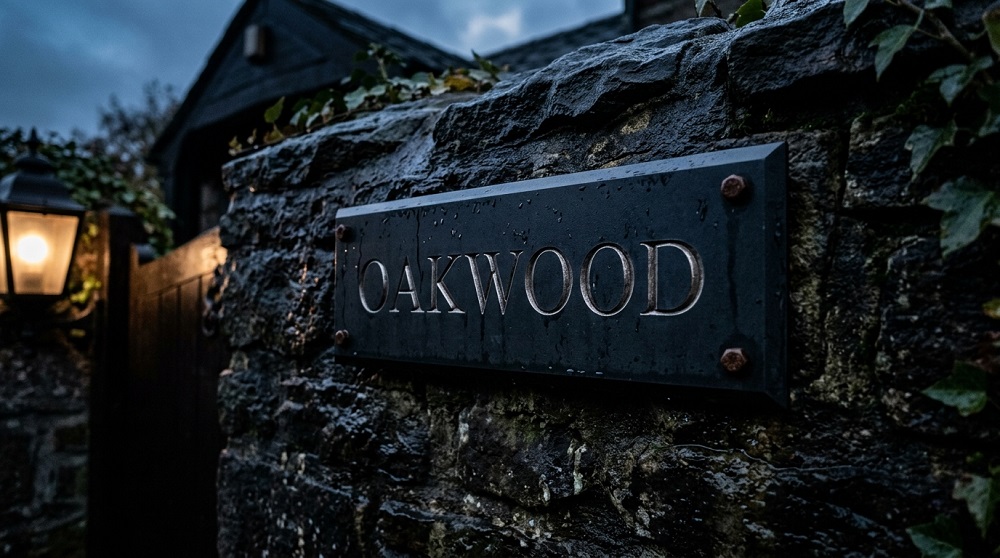
Many of the most enduring house names pull straight from the landscape. Thornfield — famously the home of Mr. Rochester in Charlotte Brontë’s Jane Eyre — blends the ruggedness of thorns with the openness of fields. Elmwood speaks to the tall, graceful elm tree once common across British countryside. Ferndale suggests a sheltered valley where ferns grow undisturbed.
These nature-rooted names work because they’re honest. They describe what was actually there — and in doing so, they anchor a home to its specific corner of the earth.
Why It Still Matters
There’s a quiet power in naming your home after something that came before you. It connects your daily life to a longer story — of land, of people, of time passing slowly through the same rooms and the same light.
A name doesn’t just label a house. At its best, it reminds you why you chose it in the first place.