
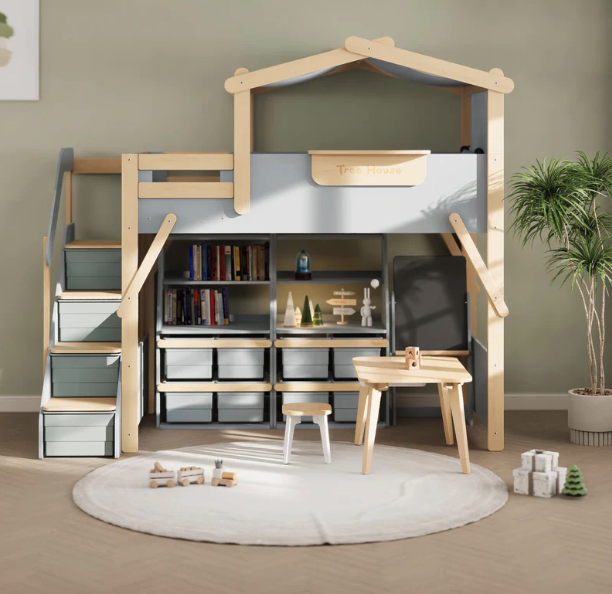
The loft bed is one of the most space-efficient furniture configurations available to Australian families in children's bedrooms where both sleep and functional floor space are needed within a compact footprint. Unlike a standard single bed that provides only a sleeping surface, or a bunk bed that provides two sleeping surfaces, a loft bed provides one elevated sleeping berth with an entirely open and functional space beneath the raised platform, creating a dedicated zone for study, play, or storage within the same floor footprint as a standard bed. This article defines what a loft bed is, how it works, who benefits most in the Australian context, and what Australian families need to know about safety, sizing, and the practical daily realities of loft bed use.
- Definition
- What is a loft bed?
- How Loft Beds Work in Australian Bedrooms
- How does a loft bed function in a typical Australian children's bedroom?
- Loft Bed vs Bunk Bed in Australia
- What is the difference between a loft bed and a bunk bed?
- Benefits of Loft Beds for Australian Children
- What are the main benefits of a loft bed for Australian families?
- Drawbacks of Loft Beds for Australian Children
- What are the limitations of loft beds for Australian families?
- Australian Bedroom Size Requirements
- How much ceiling height does a loft bed need in an Australian bedroom?
- Under-Bed Space and Safety
- What can go under a loft bed in an Australian bedroom?
- Safety Considerations for Australian Loft Beds
- What safety requirements apply to loft beds in Australia?
- Frequently Asked Questions
- Is a loft bed or a bunk bed better for a single Australian child?
- At what age can an Australian child use a loft bed?
- How do Australian parents make a loft bed for a child afraid of heights?
- Can a loft bed be converted to a standard bunk bed in Australia?
- Final Thoughts
Definition
What is a loft bed?
A loft bed is a single elevated sleeping berth positioned at the top of a freestanding frame, with the space beneath the raised sleeping platform left entirely open for functional use. The sleeping platform is typically at a height of 130 to 170 cm from the Australian floor, requiring a fixed ladder for access and guard rails on all open sides of the elevated sleeping surface. The open zone beneath the loft bed platform, approximately 100 to 130 cm of headroom in a standard Australian residential ceiling height of 240 cm, can be configured as a desk and study area, a play space, wardrobe or storage unit, or a combination of these depending on the Australian child's specific bedroom requirements.
How Loft Beds Work in Australian Bedrooms
How does a loft bed function in a typical Australian children's bedroom?
In a typical Australian children's bedroom of 9 to 12 square metres, a loft bed functions as both the sleeping surface and the organising principle of the entire room layout. The elevated sleeping berth uses the upper portion of the room's vertical height, while the open zone beneath the platform provides the functional area that would otherwise require additional furniture footprint elsewhere in the Australian bedroom. The ladder provides daily access to the elevated sleeping position. Guard rails on all open sides of the sleeping platform prevent the Australian child from rolling off the elevated surface during sleep. The remaining Australian bedroom floor space, freed from the requirement to accommodate a standard bed footprint, can be allocated to a wardrobe, reading nook, or additional storage as the specific Australian child's needs require.
Loft Bed vs Bunk Bed in Australia
What is the difference between a loft bed and a bunk bed?
A loft bed has one sleeping berth elevated at the top of the frame, with the lower space open for functional use. A bunk bed has two sleeping berths stacked vertically, both used for sleeping. The loft bed is the right choice for one Australian child who needs both sleep and functional space within a single frame footprint. The bunk bed is the right choice for two Australian children who need two sleeping surfaces within a single frame footprint. The two products solve different Australian family problems and are not directly competing choices for the same situation.
Benefits of Loft Beds for Australian Children
What are the main benefits of a loft bed for Australian families?
The primary benefit of a loft bed for Australian children is floor space efficiency: by elevating the sleeping surface, the loft bed frees the floor area beneath for functional use without adding to the room's total furniture footprint. For Australian children in smaller bedrooms who need both a quality sleep surface and a dedicated study desk, the loft bed provides the most space-efficient solution available in the Australian children's furniture market. Secondary benefits include the appeal of the elevated sleeping position to most Australian primary school children, the psychological separation between the sleeping zone above and the study or play zone below that some Australian children find helpful for both sleep and concentration, and the visual interest of the elevated frame that makes the loft bed one of the most engaging Australian children's bedroom furniture configurations available.
Drawbacks of Loft Beds for Australian Children
What are the limitations of loft beds for Australian families?
The primary limitations of loft beds for Australian children are: the minimum age requirement of six years for the elevated sleeping berth, which makes loft beds inappropriate for younger Australian children; the ceiling height requirement that can make loft beds impractical in Australian homes with lower ceilings, particularly loft conversions and older period properties; the physical demand of making the elevated bed that some Australian families find impractical; and the single sleeping capacity that means loft beds cannot serve two Australian children simultaneously in the way a bunk bed can. For Australian families with a child under six years, a standard single bed is the more appropriate configuration regardless of the space efficiency appeal of the loft.
Australian Bedroom Size Requirements
How much ceiling height does a loft bed need in an Australian bedroom?
A minimum of 90 cm clearance between the loft bed sleeping surface, the top of the mattress, and the Australian ceiling above is required for comfortable and safe use of the elevated sleeping berth. In a typical Australian bedroom with a 240 cm ceiling, a loft bed frame with a sleeping platform slat base at 150 cm from the floor used with a 12 cm mattress requires: 150 + 12 + 90 = 252 cm, which exceeds the 240 cm ceiling. Australian families must confirm the specific ceiling height calculation, frame height, mattress depth, and required clearance, before purchasing any loft bed for a specific Australian bedroom.
|
Loft Platform Height |
Mattress Depth |
Required AU Ceiling Height |
Common in AU Homes? |
|
130 cm |
12 cm |
232 cm |
Fits most AU homes with 240 cm ceilings |
|
140 cm |
12 cm |
242 cm |
Borderline for 240 cm AU ceilings |
|
150 cm |
12 cm |
252 cm |
Requires 260+ cm ceiling in AU home |
|
155 cm |
15 cm |
260 cm |
Requires 270+ cm ceiling in AU home |
Under-Bed Space and Safety
What can go under a loft bed in an Australian bedroom?
The open zone beneath an Australian loft bed can be configured as: a desk and study area with approximately 100 to 120 cm of headroom for a seated Australian child; a play space with the same headroom range; a wardrobe or tall storage unit if the headroom allows; or a combination of these within the same under-platform zone. Australian parents should confirm the specific under-platform headroom of the loft bed model before purchasing to ensure the intended furniture or activity fits without the Australian child needing to crouch uncomfortably in the space. A minimum of 100 cm headroom for a seated study position is the practical standard for comfortable use of the under-platform space as a study zone in an Australian bedroom.
Safety Considerations for Australian Loft Beds
What safety requirements apply to loft beds in Australia?
Australian loft beds are not explicitly governed by AS/NZS 4220, which specifically covers bunk beds, but quality Australian loft bed manufacturers apply the same guard rail height, ladder safety, and structural load rating principles to their loft configurations as AS/NZS 4220 requires for bunk beds. Australian parents should confirm the guard rail height above the mattress surface, the maximum safe mattress depth, the structural load rating for the sleeping platform, and the ladder rung specification for the specific Australian loft bed model before purchasing. Minimum age of six for the elevated sleeping berth applies to loft beds in Australia as it does to bunk bed top berths, for the same physical coordination and sleep movement awareness reasons.
Frequently Asked Questions
Is a loft bed or a bunk bed better for a single Australian child?
A loft bed is better than a bunk bed for a single Australian child because it provides the same elevated sleeping position and floor space efficiency as the top berth of a bunk, with the under-platform space configured for the single child's functional needs, study, play, or storage, rather than a second sleeping berth that goes unused. A bunk bed for a single Australian child wastes the lower berth sleeping capacity that is the bunk's primary advantage over a standard single bed.
At what age can an Australian child use a loft bed?
The minimum recommended age for the elevated sleeping berth of an Australian loft bed is six years, when physical coordination, sleep movement awareness, and the ability to safely use the ladder in both ascending and descending directions are reliably established for most Australian children. Australian children under six should use a standard single bed at ground level regardless of the space efficiency appeal of the loft bed configuration.
How do Australian parents make a loft bed for a child afraid of heights?
For an Australian child who is interested in a loft bed but nervous about the elevated sleeping position, a gradual familiarisation approach works best: spend several days having the Australian child climb and descend the ladder during the day as play before the first overnight use; allow the child to rest but not sleep on the elevated platform during the day initially; use a consistent nightlight that illuminates the ladder for reassurance during night waking; and position the loft bed against a wall so the wall provides psychological containment on one side of the elevated platform. Most Australian children overcome initial height nervousness within one to two weeks of consistent positive loft bed exposure.
Can a loft bed be converted to a standard bunk bed in Australia?
Some Australian loft bed systems are designed as modular configurations that can be expanded by adding a lower sleeping berth to create a standard bunk configuration when a second Australian child joins the bedroom. Confirm whether the specific Australian loft bed model supports this bunk conversion before purchasing if this flexibility is important to the Australian family.
Final Thoughts
A loft bed is the most space-efficient Australian children's bedroom configuration for a single child who needs both quality sleep and functional floor space within a compact bedroom footprint, providing the elevated sleeping berth of a bunk bed's top position with the under-platform space configured for the individual Australian child's study, play, or storage needs. Australian families considering loft beds and other elevated children's bed configurations can browse current options at boori.com.au/collections/kids-bunk-beds